

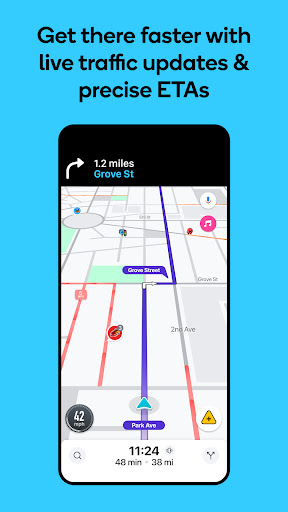
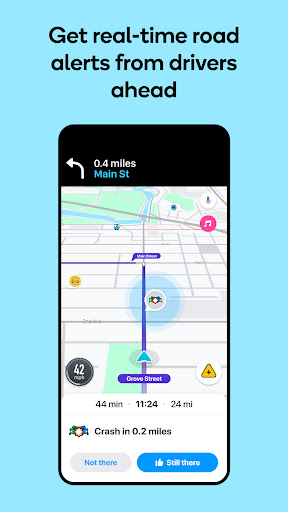
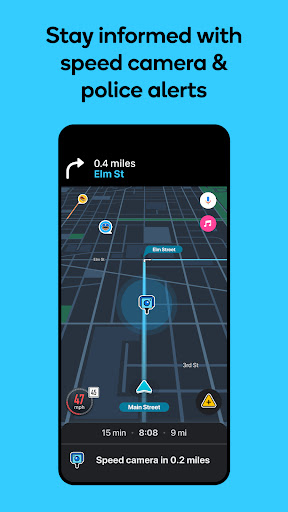

Waze built its reputation on real-time crowdsourced traffic data, and that foundation still holds. In dense urban areas with an active user base, it genuinely reroutes faster than static-map alternatives, and the hazard reporting — police, accidents, road debris, potholes — is reliably accurate when enough drivers are contributing. For daily commuters in cities where Waze has strong adoption, it measurably reduces travel time.
The cracks show in areas with fewer users. Waze’s crowdsourced model means its advantage over Google Maps shrinks proportionally with user density, and in rural or less-populated routes it can be actively worse. Since Google’s acquisition the app has integrated Waze features into Maps, which has somewhat blurred the case for running both. The interface is more cluttered than Maps and the default map style is busier than necessary.
Privacy is a recurring concern: Google owns extensive location data from Waze, and the default settings share your real-time position aggressively. Worth reviewing the privacy settings before regular use. For urban commuters, though, it’s still the best specialized tool for traffic avoidance.

Verdict: The best traffic-avoidance tool for city commuters, but its advantage over Google Maps has narrowed since the acquisition.