

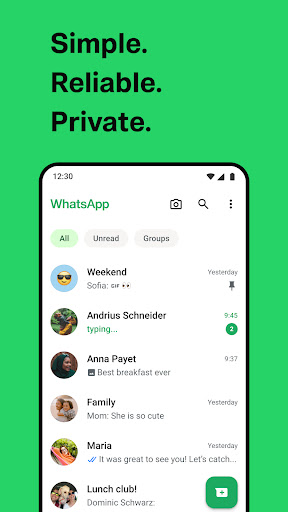
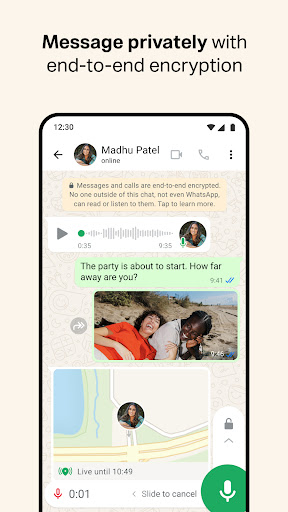
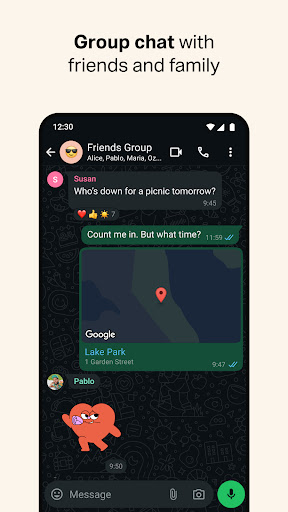
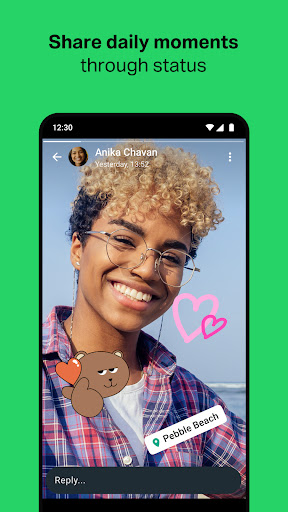
WhatsApp has earned its place as the default messaging app for most of the world outside North America. End-to-end encryption on messages and calls is on by default, which is more than you can say for SMS or most social-platform DMs. The interface is deliberately plain: chats, calls, status updates, and nothing else fighting for your attention.
The limitations feel increasingly deliberate rather than accidental. Disappearing messages and view-once media exist, but the privacy controls around cloud backups are confusing, and if you back up to Google Drive, that backup sits outside the encryption WhatsApp applies to in-transit messages. Business accounts have crept into personal inboxes more aggressively over time, and Meta’s data-sharing practices remain a valid concern for users who actually read the terms.
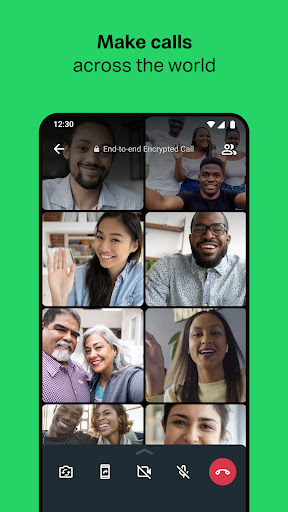
For pure day-to-day reliability, few apps match it. Voice calls hold up on weak mobile connections where a regular phone call would drop. Group calls support up to 32 people. File sharing up to 2GB works without drama. The tradeoff is that you’re locked into a phone-number identity, making it annoying to use across multiple devices until fairly recently.

Verdict: The most reliable messaging app most people will ever use, but its Meta ownership and backup encryption gaps mean it's not the privacy tool its reputation implies.