


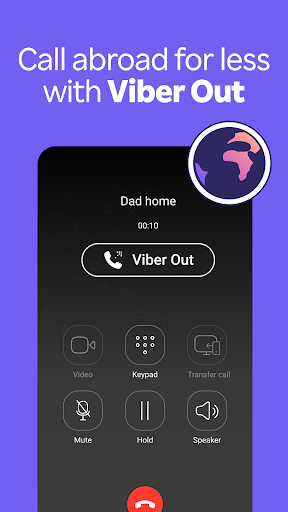
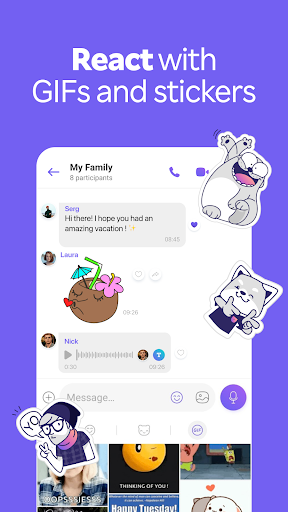
Viber was one of the first apps to make free international calls and messages feel normal, and in several countries, particularly in Eastern Europe, the Middle East, and South Asia, it has the kind of installed base that makes it a practical necessity rather than a choice. If your family or local community is on Viber, the app functions well enough for daily communication. Calls are generally clear, group chats work, and the sticker packs are a genuinely distinctive feature that its users tend to be fond of.
Compared to WhatsApp or Telegram, Viber feels like it’s playing catch-up on features and polish. Message sync across devices has historically been less reliable, and the app’s resource usage tends to run heavier than alternatives on lower-end Android hardware. The Rakuten branding shift hasn’t added much from a user perspective, and the cashback and shopping integrations that Rakuten has tried to weave in feel out of place in a messaging app.
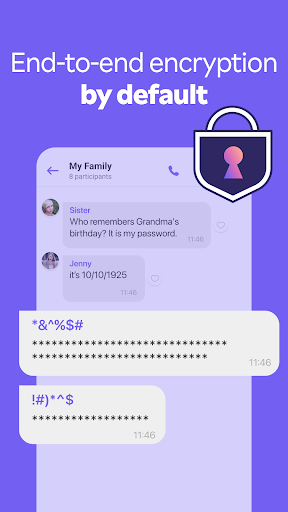
End-to-end encryption is on by default for one-on-one messages and calls, which puts Viber ahead of Telegram on that dimension. For users who are on it because their network is there, it does the job. As a deliberate first choice in a market where alternatives exist, it’s harder to recommend.

Verdict: Viber works fine if your contacts are on it, but outside of the regions where it has genuine network density, there's little reason to choose it over more refined alternatives.