
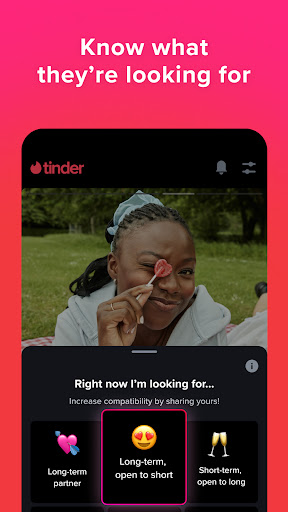
The pool is the feature
Tinder has more people actively swiping than any rival, and in dating apps that counts for more than any clever feature. A beautifully made app with nobody inside it is a closed room. This one is never empty, which explains both why the score sits below the popularity and why people keep coming back to it anyway.
Swipe, match, chat
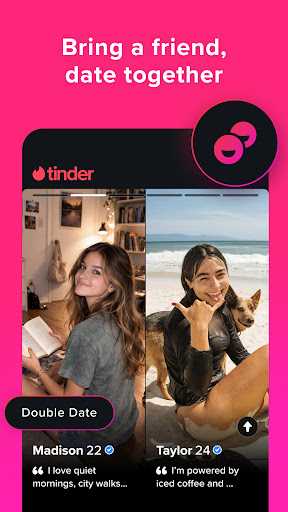
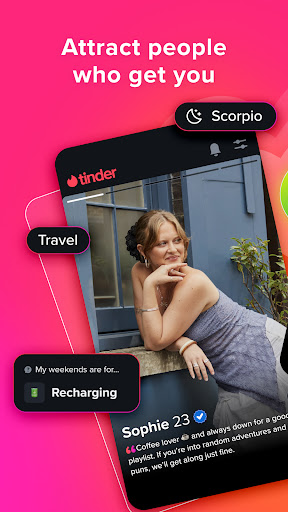
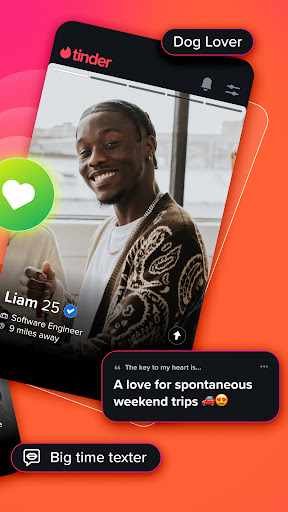
The interaction is deliberately thin: photographs, a line or two of profile, swipe left or right, and a chat window if both of you swiped the same way. That thinness is the point, because it turns dating into something you can do while queueing rather than a project you have to schedule. Filters cover distance and age, the profile prompts give you something to react to beyond a face, and the messaging is plain but adequate once a match happens. Passport, which lets you swipe in a city before you get there, is the one paid feature people mention without being asked about it.
What density actually gets you
In a big city you will not run out of profiles, and in smaller places where the alternatives are empty this is often the only app with anybody on it at all. For travel that settles the question on its own. The verification badges and the in-app safety tools have improved over time, which does not fix the underlying awkwardness of meeting strangers from the internet but does take the sharpest edges off it.
The free tier, and what is left of it
This is where the score comes from. Likes are capped daily, so a long evening of swiping ends with a screen telling you to come back tomorrow or pay. Seeing who already liked you, which is the single most useful piece of information the app holds, sits behind the subscription. So do the visibility boosts, which are the only lever that meaningfully changes how many matches arrive. The tiers are arranged so the middle one feels short of what you actually want, and that is a sales structure rather than a product one. For a lot of men the free experience produces so little that it curdles into a bad mood within a week or two of trying, and that outcome is a design decision, not bad luck. The app also collects a great deal of personal information along the way.
Works if you pay for it
Pay, and in a dense market it does roughly what these apps can do, which is put you in front of a lot of people quickly and leave the rest to you. Do not pay, and the likely result is a lot of swiping and very little else. Work out which of those two you are signing up for first, because the free version is not a trial of the paid one. It is a thinner, different product wearing the same name.
From the Play Store listing
These figures come from the official Google Play listing and can change at any time. Check the current listing.
- Play rating
- 3.8 out of 5
- Ratings
- 9,021,331
- Installs
- 500,000,000+
- Developer
- Tinder LLC
- Category
- Dating
How those ratings split