
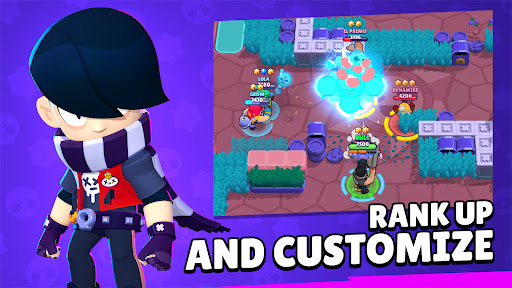
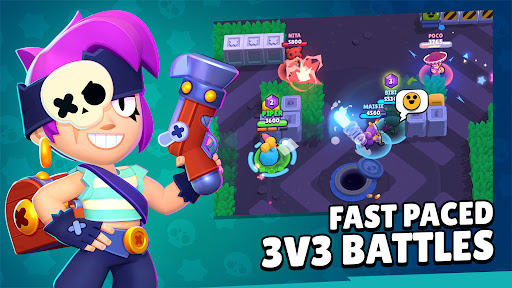
Supercell’s arena game runs on top-down maps you could fit on a postcard, and that is the point. Sightlines are short, cover is everywhere, and a match is decided by who walked round the right wall.
A roster with actual differences in it
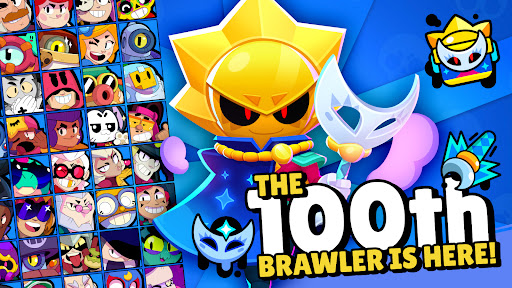
Tanks who want to be in your face, snipers who want a clean lane, throwers who lob over walls, healers, and control specialists who make a corridor unusable. They play differently rather than sharing a kit with different art, and that variety is what keeps the modes from collapsing into one strategy.
A few minutes in Gem Grab or Showdown
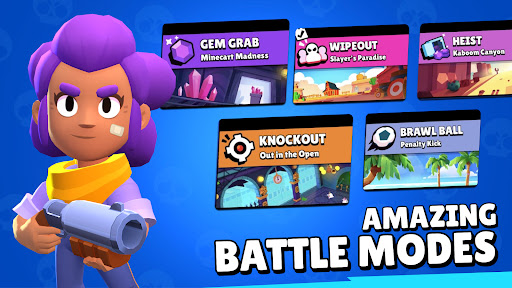
Matches are short by design, which is the smartest decision in the whole game. Gem Grab asks a team to hold a central mine and survive with the count, so it is a tug of war rather than a deathmatch. Showdown drops you into a shrinking map to scavenge power cubes and outlive everyone. Heist, Brawl Ball and the rotating modes each reward a different part of the roster, so the brawler you love is excellent on some days and useless on others.
Chip, chip, then commit
Super charges through damage dealt, so a match has a rhythm rather than a pace. You poke from cover, watch the meter, and pick the moment to spend it. Getting that moment wrong is the most common way to lose a fight you were winning.
What the roster breadth buys you
Mode rotation plus a wide collection means you are rarely stuck. If the current map punishes your favourite thrower, someone else in your roster suits it, and that flexibility is also why the spending pressure feels milder than in a card-collection game where one upgraded card decides a match outright. The event calendar stays busy and the presentation is loud, readable and quick.
Trophies that measure the wrong thing
Matchmaking is the persistent sore point and the thing most likely to make you quit. Trophy count records how much you have played a brawler, not how well, so a bracket can contain someone on their fortieth hour and someone on their fourth, sorted into the same match by a number that says they are equal. Unlocking a new brawler makes it worse, because the reward for finally opening someone is a losing streak while their power level catches up, played against opponents whose numbers are already there. Supercell has reworked this repeatedly. It still bites, and the chaotic team modes amplify it, because with randoms the outcome starts to feel like weather.
Go in for the roster and the mode rotation, not for a clean competitive climb. The moment-to-moment brawling is sharp and often very funny, and the mid-tier grind is rough enough that it is worth deciding up front that you are here to mess about with characters.
From the Play Store listing
These figures come from the official Google Play listing and can change at any time. Check the current listing.
- Play rating
- 4.2 out of 5
- Ratings
- 25,915,049
- Installs
- 500,000,000+
- Developer
- Supercell
- Category
- Action
How those ratings split