
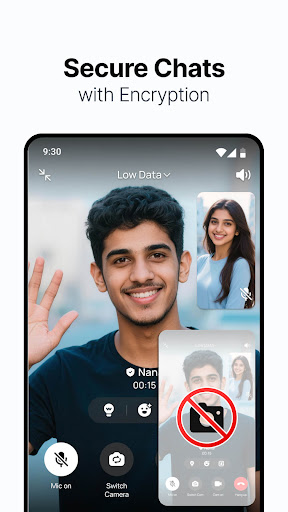
Designed around a weak signal
imo grew up where data is expensive and bandwidth is scarce, and every decision in it follows from that. Its users call between South Asia, the Middle East and Southeast Asia, often on connections that make the better-known apps stall, and often on older, cheaper handsets that struggle with anything heavy. The app asks very little of the phone it runs on, which is the reason it spread the way it did.
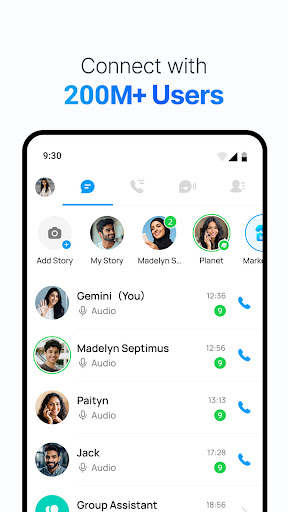
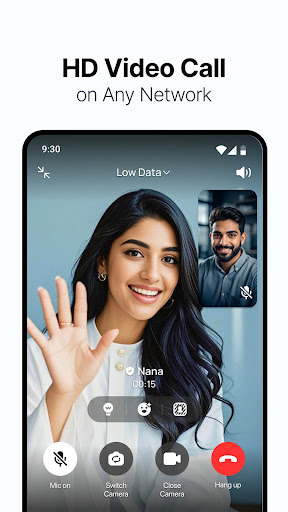
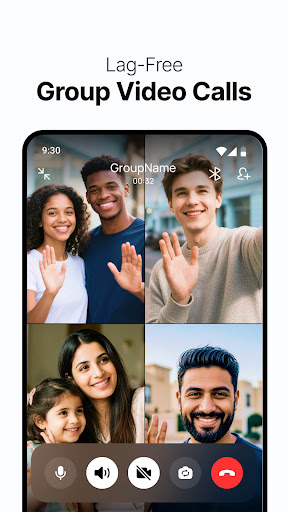
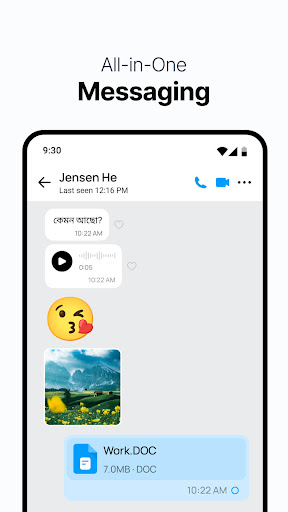
Video and voice compress hard and stay usable at bitrates where the alternatives give up. That’s the whole product. A call that drops on one app frequently holds here, and for a family split across two countries that single difference decides which icon everyone taps. Group calls survive better than the compression suggests they should, sharing photos and files works without routing everything through a browser, and the calling screen is plain enough for a parent who isn’t comfortable with phones to use unaided.
Holding a call nobody else can hold
On a constrained network it regularly beats larger, better-funded competitors, and no amount of polish elsewhere counts for anything when the call won’t connect at all. For the people this is built for, that’s the beginning and the end of the comparison, and it’s why the app survives criticism that would sink something aimed at a richer market.
The permission list is the problem
The privacy trade-off is the reason this scores where it does, and it isn’t a footnote. The app requests access well beyond what calling and messaging need, and the data collection that sits behind those requests is the part to read carefully rather than tap through. Here’s how it shows up in practice: set it up to ring one relative abroad, grant what the setup flow asks for, and you’ve handed over a map of your contacts and a good deal more, to an app whose handling of that material you have no way to inspect. Anyone whose conversations are ordinary family conversations may decide that’s an acceptable price for a call that connects. Anyone discussing something they’d mind seeing elsewhere should use a client that has been independently audited instead, because the cost here is paid quietly and can’t be taken back.
The rest is smaller. A dated interface, and a bolted-on layer of stories, nearby users and an explore feed that adds noise nobody arrived looking for.
If the job is keeping in touch with family over a poor connection, this does something the alternatives struggle with, and it does it well. If the content of those calls matters to you, the trade is a real one and it should send you elsewhere.
From the Play Store listing
These figures come from the official Google Play listing and can change at any time. Check the current listing.
- Play rating
- 4.4 out of 5
- Ratings
- 9,044,946
- Installs
- 1,000,000,000+
- Developer
- imo.im
- Category
- Communication
How those ratings split